When an electric vehicle starts losing range, showing battery warnings, or refusing to charge properly, the fault is not always a full battery failure. In many cases, the issue sits within a smaller part of the pack, the battery management system, the cooling circuit, or an individual electronic module. That is why specialist EV battery repair can be a practical and cost-conscious option for drivers across Townsville.
A targeted repair can often return performance, charging reliability, and day-to-day confidence without the expense of replacing the entire battery pack.
EV Battery Repair Services for Hybrid and Electric Vehicles
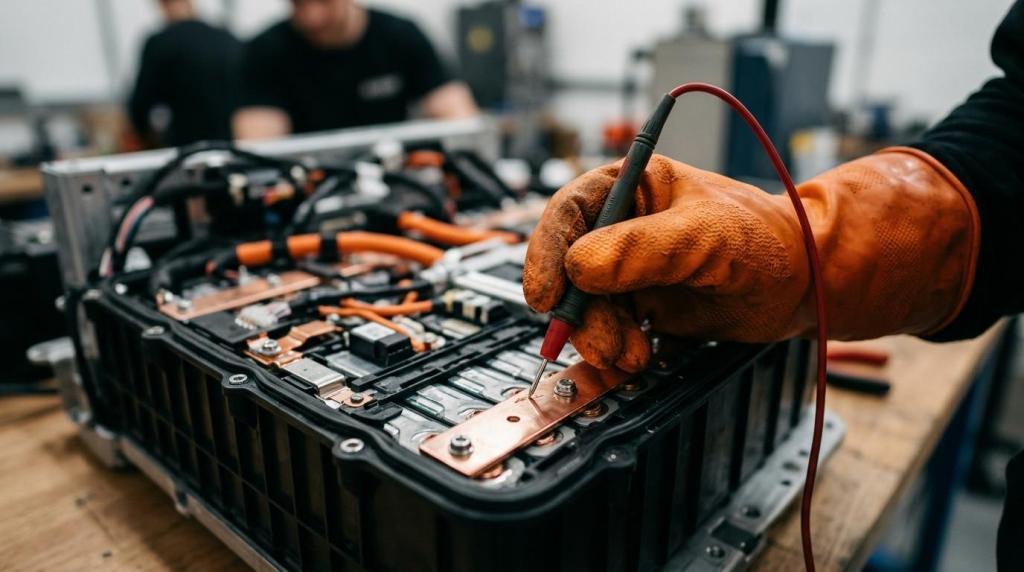
Battery repair work can cover far more than a simple swap of parts. Modern EVs rely on tightly managed high-voltage systems, so the job usually starts with battery health testing, fault code analysis, and a close review of pack performance data. From there, repairs may involve replacing weak modules, correcting voltage imbalance, addressing charging faults, or repairing related electronics.
Townsville Hybrid and EV Repairs focuses on hybrid and EV systems with specialised equipment designed for high-voltage testing and repair. That matters when the vehicle needs accurate fault tracing rather than guesswork. It also matters when the battery issue is tied to a control unit, sensor problem, or a failed electronic component inside the wider system.
Services commonly included in EV battery repair work include:
- Module and cell replacement
- Battery pack reconditioning
- Battery health evaluation
- BMS diagnostics and repair
- Battery cooling system checks
- High-voltage wiring inspection
- Electronic module repair
Not every battery fault leads to full replacement, and that can make a very real difference to cost and turnaround time.
Signs You May Need EV Battery Repair
Battery problems often build gradually before they become serious. A drop in usable range, charging that stops earlier than expected, or a warning light that appears only now and then can all point to a battery system that needs attention. Townsville conditions can add pressure too, especially when heat affects cooling performance or exposes issues in an ageing pack.
Some owners notice that the vehicle still drives, but the battery percentage falls faster than it used to. Others find the car enters reduced-power mode, charges inconsistently, or displays high-voltage fault messages. These symptoms should be checked early, before a smaller issue turns into a larger repair.
Common warning signs include:
- Reduced driving range: the vehicle covers fewer kilometres on a full charge than it previously did
- Charging stops early: the battery will not reach expected charge level or takes much longer than normal
- Battery or EV warning lights: dashboard messages linked to high-voltage, battery service, or charging faults
- Power loss under load: noticeable drop in performance during acceleration or hills
- Overheating alerts: battery temperature warnings, fans running heavily, or repeated thermal faults
- Intermittent charging faults: the car charges on one occasion, then fails on the next
These symptoms do not all mean the same repair, which is why proper testing is the first step.
EV Battery Diagnostics and High-Voltage Safety Checks
A reliable repair starts with data. High-voltage diagnostic equipment is used to read fault codes, battery management data, temperature readings, voltage spread, and pack condition. This helps identify whether the issue comes from degraded cells, poor balance between modules, a cooling fault, or a control-system problem.
The next stage often includes capacity testing and inspection of the battery pack’s behaviour under charge and load. If the data points to imbalance or a weak section of the pack, technicians can isolate the likely fault area and inspect further. In some cases, the repair involves a module replacement. In others, the answer is reconditioning, calibration, or an electronic repair within the battery control system.
Safety is built into every stage of the process.
High-voltage batteries require controlled procedures, insulated tools, and trained staff. The vehicle must be correctly powered down, isolated, and verified safe before deeper inspection begins. That is one reason workshop-based repair is usually the right setting for EV battery work, rather than roadside servicing.
Battery Cooling and Electronic Module Checks
Townsville heat can be hard on battery systems, so cooling checks are a routine part of serious EV battery diagnostics. A blocked filter, poor coolant flow, failed fan, or pump issue can trigger repeated thermal warnings and accelerate battery wear. If overheating sits behind the fault, repairing the battery alone is only part of the job. The cooling system needs attention as well.
Electronic module repair is another area that can make a major difference. Some faults come from battery-related control electronics rather than the cells themselves. Repairing or replacing the affected module can restore normal communication, charging, and battery management without moving straight to a full pack replacement.
Battery Repair vs Full EV Battery Replacement
For many vehicles, repair is the smarter first option. If the problem is limited to selected modules, cell imbalance, a BMS issue, or damaged connections, repairing the existing pack can save thousands of dollars compared with sourcing and fitting a full replacement battery.
There is also a practical benefit beyond cost. Repair keeps more of the original battery in service, which reduces waste and gets the vehicle back on the road with less disruption. When carried out correctly, module-level work can restore usable range and improve charging consistency.
The difference is clear in broad terms:
| Option | Best suited to | Typical cost range (AUD) | What it may involve |
|---|---|---|---|
| Targeted battery repair | Localised faults, imbalance, BMS issues, weak modules | $1,000 to $7,000+ | Testing, module replacement, rebalancing, electronic repair |
| Full battery replacement | Severe pack damage or widespread failure | $12,000 to $20,000+ | New or replacement pack, installation, system setup |
| Battery health evaluation only | Early symptoms or pre-purchase checks | Varies | Fault scan, battery data review, condition reporting |
Actual pricing depends on battery size, vehicle brand, parts availability, and how deep the repair needs to go.
EV Battery Repair Costs and Turnaround Times
Most EV owners want two answers straight away: how much will it cost, and how long will it take? The honest answer is that both depend on the fault. A software or control issue may be sorted far faster than a pack that needs to be opened, tested at module level, repaired, then reassembled and verified.
Diagnostic assessment is often completed within the same day or over one workshop booking, depending on workload and the vehicle. Repairs can then take anywhere from one to several days. If parts are available and the issue is straightforward, turnaround is usually much faster than waiting for a full battery replacement.
Costs are influenced by several factors:
- Battery size: larger packs usually mean more labour and higher parts costs
- Vehicle make and model: some systems are easier to access and some parts are harder to source
- Fault type: module failure, cooling issues, and electronic faults all require different repair paths
- Parts availability: repair time can extend if specific components need to be ordered
- Scope of testing: deeper pack-level investigation takes longer than a basic scan
A written assessment before major work helps owners make a clear decision and avoids surprises later.
Specialist EV and Hybrid Workshop Support in Townsville
Battery repair is not general mechanical work with a different badge on the bonnet. It needs the right tools, the right safety procedures, and technicians who work with hybrid and EV systems rather than treating them as an occasional sideline.
Townsville Hybrid and EV Repairs is built around that specialist focus. With trained staff, specialised testing equipment, and electronic module repair capability, the workshop is set up to diagnose faults accurately and carry out battery-related work with the care high-voltage systems demand.
That specialist approach supports:
- Accurate battery and BMS fault tracing
- High-voltage safety procedures
- Module-level repair decisions
- Electronic control unit diagnosis
- Hybrid and EV-specific servicing
For drivers who want a realistic alternative to full battery replacement, that level of focus can be the difference between replacing a whole pack and repairing the part that has actually failed.
Arrange EV Battery Testing and Repair
If your EV has lost range, shows battery warnings, struggles to charge, or feels different on the road, early testing is the best next step. A proper battery health evaluation can show whether the issue is related to cells, modules, cooling, wiring, or battery management electronics.
Townsville drivers looking for specialist hybrid and EV support can book in for battery diagnostics, repair assessment, module testing, and electronic fault investigation through a workshop dedicated to these systems.