EV charger repair is safest and most effective when the fault is diagnosed at subsystem level, not guessed from symptoms alone. A car that will not charge may have a problem in the onboard charger, charge port, battery management system, wiring, or the charging equipment itself.
TL;DR: Summary
- EV charger repair should start with diagnosis of the exact charging subsystem, because charging faults can come from the onboard charger, charge port, battery management system, wiring, or the charging equipment rather than the battery pack alone.
- If AC charging fails but DC fast charging still works, the onboard charger or AC charging path is a leading suspect because DC charging usually bypasses the onboard charger.
- If the car fails on one charger only, the fault may be in the charger, cable, or site power supply; if it fails across multiple chargers, the vehicle-side charging system is more likely.
- Qualified EV repair needs high-voltage training, protective equipment, and EV-specific diagnostics. NHTSA and WorkSafe Queensland both point to specialist handling for high-voltage systems, and Queensland guidance references AS 5732:2022.
- Useful tests include fault code retrieval, live data analysis, sensor checks, load testing, and repair verification. These steps separate charge port issues from BMS lockouts, communication faults, and onboard charger failures.
- Repair is often practical for connector, wiring, communication, and module faults. Replacement is more sensible when there is severe heat damage, repeated internal charger failure, or water ingress that compromises reliability.
That matters because EV charging systems mix low-voltage controls, high-voltage components, software permissions, and external charging hardware. The right repair path saves time, reduces parts-swapping, and keeps high-voltage work within accepted safety practice.
What usually causes an EV charger to stop charging?
Most EV charging failures come from the charge port, onboard charger, battery management system, wiring, or charging equipment. Nissan Leaf, Tesla, BYD, MG and Hyundai models can show the same symptom for different reasons.
A common misconception is that “not charging” always means a bad battery pack. In practice, the battery pack is only one part of the charging chain. NHTSA notes that the pack is managed by hardware and software through a battery management system, and that control layer can restrict charging even when the cells are not the primary fault.
Typical causes include damaged charge port pins, poor connector locking, communication errors between the vehicle and charger, internal onboard charger faults, sensor readings outside limits, and wiring or insulation issues. If the system sees a safety risk, it may refuse to charge by design.
Is the fault in the home charger, the cable, or the car?
You can usually narrow this down by comparing where the fault appears. A Tesla Wall Connector, portable Level 1 unit, or public AC charger can each help separate site faults from vehicle faults.
If the vehicle charges normally at a public station but not at home, the first suspects are the home EVSE, supply circuit, connector condition, or charging settings. If it fails on several known-good chargers, the vehicle-side system becomes the stronger suspect. This simple A/B check often saves a lot of diagnostic time.
A useful rule is this: if AC charging fails but DC fast charging works, suspect the onboard charger or AC-side communication path. If both AC and DC fail, look wider at the charge port, BMS permissions, contactors, wiring, or high-voltage isolation status.
“Townsville Hybrid and EV Repairs diagnoses onboard charger issues, AC/DC charging faults, charging port faults, and communication errors with charging stations.”
Another trap is blaming the charging cable before checking the vehicle logs and live data. Some faults only appear under load or only after the BMS sees a temperature, voltage, or communication condition outside its safe window.
What are the most common EV charger repair issues and fixes?
The most common EV charger repairs involve diagnosis first, then targeted repair of the port, onboard charger, wiring, or control electronics. Townsville Hybrid and EV Repairs is a relevant local example of a workshop that starts with EV-specific fault finding rather than guesswork.
Once the symptom is confirmed on a known-good charger, the likely repair paths become clearer.
- Specialist charging-system diagnosis: A hybrid and EV workshop such as Townsville Hybrid and EV Repairs can separate AC/DC charging faults, BMS lockouts, and module issues using fault code retrieval and live data.
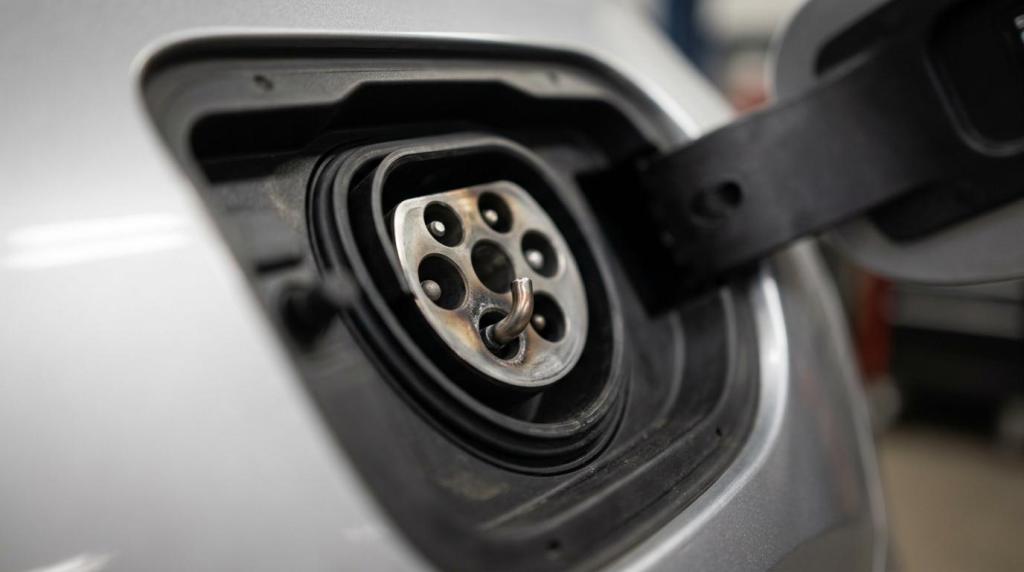
- Charge port repair: Bent pins, heat damage, latch faults, and contamination can stop charging or interrupt handshaking with the charger.
- Onboard charger repair: If AC charging fails across multiple chargers but DC charging still works, the AC-to-DC conversion unit is a common target.
- Wiring and connector repair: High-resistance joints, damaged harness sections, or insulation faults can trigger shutdowns or intermittent charging.
- Communication fault repair: Vehicle-to-charger handshake problems can sit in control modules, sensors, or related electronics rather than the connector itself.
- BMS-related correction: Charge limits, shutdowns, or warning lights may need sensor testing, balance checks, module communication review, or battery health evaluation.
The best fix is the one that matches the verified failure point, not the loudest symptom. Slow charging, charge interruption, and a warning light can all come from different subsystems.
How should EV charger faults be diagnosed step by step?
A sound diagnosis follows a repeatable sequence: confirm the symptom, scan the system, then isolate the failed part. Tesla and Hyundai vehicles both benefit from this logic because charging faults often overlap.
Step 1 is symptom confirmation. The vehicle is tested with a known-good charger and, where practical, compared across AC and DC charging. That matters because charger output, battery state of charge, and the vehicle’s internal charger capacity all affect charging behaviour, as the U.S. DOE Alternative Fuels Data Center notes.
Step 2 is electronic diagnosis. Fault code retrieval, live data analysis, sensor testing, and communication checks help show whether the charger request is being denied by the vehicle, lost in the port handshake, or interrupted in the onboard charger path.
“Townsville Hybrid and EV Repairs uses fault code retrieval, live data analysis, sensor testing, load testing, balance checks, and repair verification.”
Step 3 is subsystem verification. If test results point to the port, the connector, locking mechanism, and related wiring are inspected. If results point to the onboard charger, the workshop verifies power supply, control signals, thermal conditions, and repair outcome before returning the vehicle.
What should you check before booking EV charger repair?
A few basic checks can make the booking more productive and reduce duplicate testing. Tesla, BYD, Kia and MG owners can all help the workshop by recording the exact charging conditions.
Start by trying a second charger if it is safe and practical. Then note whether the fault occurs on AC only, DC only, or both. If the car begins charging and then stops, record the battery state of charge, outside temperature, and any warning messages shown on the dash or charger screen.
Bring these details with you:
- Charger type: portable Level 1, home AC wall charger, public AC, or DC fast charger
- Fault pattern: never starts, starts then stops, charges slowly, or only fails at one site
- Dashboard alerts: warning lights, reduced power, charge system warnings, or battery messages
- Recent events: water exposure, connector impact, crash damage, software update, or repeated tripping
- Charging context: battery state of charge, time plugged in, and whether the connector locked normally
A common mistake is forcing the plug or repeatedly retrying a failed session. If there is heat damage, contamination, or a latch problem, repeated attempts can worsen the port and obscure the original fault.
How is onboard charger repair different from charge port repair?
Onboard charger repair targets AC-to-DC conversion hardware, while charge port repair targets the physical connector and handshake path. A Nissan Leaf and a BMW i3 can have either fault, but the symptoms are usually different.
The onboard charger sits inside the vehicle and converts AC electricity into DC for the battery pack. When it fails, AC charging across multiple chargers is often affected. DC fast charging may still work because the external DC charger usually bypasses the vehicle’s onboard charger.
Charge port faults are more physical and interface-driven. Think damaged pins, poor locking, contamination, seal issues, or connection wear. If the connector feels loose, the latch does not engage, or charging cuts in and out when the plug is moved, the port deserves close inspection first. The trade-off is simple: port repairs can be more visible and localised, while onboard charger faults often need deeper testing before repair or replacement decisions.
Why can the battery management system stop charging even when the charger seems fine?
The battery management system can block charging to protect the pack. On vehicles from Tesla to Hyundai, the BMS monitors voltage, temperature, current flow, charging behaviour, and cell balance.
That means a charging refusal is not always a charger defect. If the BMS sees abnormal temperature spread, cell imbalance, communication loss, or a sensor value outside tolerance, it can limit charging, reduce performance, or shut down the high-voltage system. Townsville Hybrid and EV Repairs notes that BMS faults can trigger charging limits and system shutdowns.
A common misconception is that “the charger is dead” when the real issue is protective logic. If there is a BMS warning plus reduced range or performance limits, then the repair path should include battery health evaluation and module communication checks, not just port or cable inspection.
How do AC and DC charging faults differ in diagnosis and repair?
AC and DC charging faults behave differently because the power conversion path is different. In AC charging, the vehicle’s onboard charger is central. In DC fast charging, the external charger supplies high-voltage DC directly to the battery system.
This distinction is one of the best diagnostic shortcuts in EV repair. If the car accepts DC fast charging but rejects AC charging, the onboard charger, AC charge control path, or related communication circuit becomes more likely. If the car rejects both, then the fault may sit in the charge port, BMS permissions, contactors, pack isolation, or a broader high-voltage control issue.
Charging speed also needs context. The AFDC states that charging can range from less than 20 minutes with DC fast chargers to 20 hours or more with Level 1 charging, depending on battery state of charge, battery capacity, internal charger capacity, and charging equipment output. Slow charging is not automatically a fault if the charger and vehicle are operating within their designed limits.
How is high-voltage safety handled during EV charger repair?
High-voltage safety depends on trained staff, proper PPE, and a documented isolation process. NHTSA and WorkSafe Queensland both support specialist handling for EV and hybrid service work.
Step 1 is hazard identification. WorkSafe Queensland highlights both low-voltage and high-voltage risks and points workshops to Australian Standard AS 5732:2022 for EV maintenance and repair operations. That means the safety plan has to cover the whole charging system, not just the battery pack.
Step 2 is isolation and verification. Qualified technicians disable and isolate the relevant circuits, use EV-specific test equipment, and prove the system state before intrusive work begins. NHTSA is clear that EV and hybrid servicing should be done by technicians with specialised high-voltage training, protective gear, and diagnostic equipment.
“Townsville Hybrid and EV Repairs is Townsville’s only advanced hybrid and EV repair centre, with specialised equipment for hybrid and EV testing and repair.”
Step 3 is controlled repair and verification. After the repair, the vehicle is re-tested under charging conditions to confirm correct operation and to check that no secondary faults remain. This is where many non-specialist attempts fall short.
When is repair practical, and when is replacement the better option?
Repair is practical when the fault is localised and verifiable. Replacement is smarter when damage is widespread, recurrent, or likely to compromise reliability.
Repair often makes sense for connector faults, local wiring damage, communication issues, sensor-related charging lockouts, and some electronic module problems. A workshop with module repair capability may be able to correct faults that would otherwise trigger full unit replacement. The gain is lower parts cost and less unnecessary component turnover.
Replacement becomes the safer choice if there is severe heat damage, corrosion, water ingress, repeated internal onboard charger failure, or a burnt connector body that cannot be trusted after repair. If diagnosis shows multiple subsystems failing together, then replacing the most affected assembly can reduce repeat visits. The key trade-off is simple: if a repaired part cannot be verified as stable under load, replacement usually offers the better long-term result.