When an EV refuses to charge, the battery is often blamed first. In practice, that is only one part of the story. A charging fault can begin in the vehicle, in the charging hardware, in the connector itself, or in the power and communication systems that sit between them.
That is why effective EV charging diagnostics start with pattern recognition, not guesswork. If the car fails on one charger only, the fault often sits with that charger, its cable, or the site power supply. If the same vehicle fails across several chargers, attention turns much more strongly to the vehicle-side charging path.
Why EV charging diagnostics should separate vehicle faults from charger faults
Modern EV charging is a managed process rather than a simple power transfer. On AC charging, the vehicle’s onboard charger converts incoming AC power into DC for the traction battery. At the same time, the battery management system monitors limits, temperature, voltage, and safety conditions before allowing charging to continue.
That means a “won’t charge” complaint can describe many different failures. The key is to sort them into the right group early, because the first steps are different for a charger-side issue than they are for a vehicle-side issue.
A useful starting point is the symptom pattern:
- Fails at one charger only: likely charger, cable, connector wear, or site power issue
- Fails at multiple chargers: likely vehicle-side charging fault
- AC charging fails but DC fast charging works: often points toward the onboard charger or AC charging path
- Charging starts then stops after a few minutes: often linked to heat, communication dropouts, or unstable supply
- Plug will not lock or latch properly: likely connector fit, port wear, or broken latch problem
Public charging networks and official charging frameworks now split faults into quite specific categories. Instead of a vague “charging error”, systems may flag issues like GroundFailure, HighTemperature, UnderVoltage, OverVoltage, WeakSignal, NoInternet, InvalidVehicleMode, or PartialInsertion. That level of detail is helpful because it points technicians toward the correct test path much faster.
Common vehicle-side EV charging faults
Vehicle-side charging faults usually involve the path from the charge port to the battery, along with the control systems that supervise the session. In many cases, the battery pack itself is healthy, but another component is blocking charging for safety reasons.
One of the most common examples is an onboard charger fault. Since the onboard charger handles AC charging conversion, a problem here can leave the vehicle unable to charge on home or public AC equipment while still allowing DC fast charging. That pattern is highly valuable during diagnosis because it narrows the field quickly.
The battery management system can also interrupt charging if it detects unsafe or out-of-range conditions. This may happen because of cell imbalance, thermal concerns, voltage irregularities, isolation concerns, or sensor data that does not make sense. In some cases, the system is doing exactly what it should do by refusing to charge until the condition is checked.
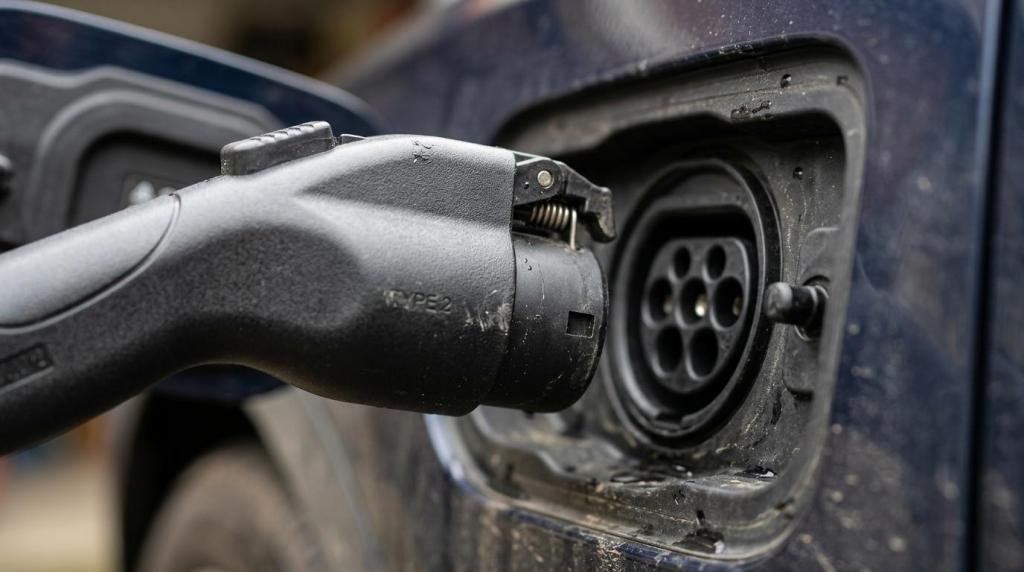
The charge port itself deserves close attention as well. Physical wear, damaged connector, contamination, latch issues, and problems in the control pilot circuit can all stop a session before it begins.
| Symptom | Likely vehicle-side area |
|---|---|
| AC charging fails everywhere | Onboard charger, AC charging circuit, charge port, related wiring |
| Charging stops with vehicle fault warnings | Battery management system, temperature monitoring, voltage control |
| Plug inserts poorly or does not lock | Charge port wear, connector latch issue, misalignment |
| Intermittent start-stop charging | Control pilot communication, port pins, wiring, module faults |
| Vehicle rejects charger immediately | Vehicle mode setting, charging control module, communication fault |
In day-to-day workshop diagnostics, the challenge is not simply finding a fault code. It is confirming whether the code reflects a failed component, a wiring defect, a communication interruption, or a protective shutdown triggered by something else in the system.
Common charger-side and site power charging problems
Not every charging failure belongs to the car. Charger-side faults are extremely common, especially when the issue appears at one location only or happens only on one particular cable.
A public or home charger may have a damaged connector, a broken connector latch, unstable internal electronics, or poor site power quality. Ground faults and supply irregularities can prevent charging from starting at all. UnderVoltage and OverVoltage conditions can also trigger session failures, either immediately or after charging has begun.
Communication and authorisation problems are another large category. On some public chargers, weak network signal, no internet connectivity, software issues, payment processing faults, or charger firmware errors can interrupt the handshake before any useful charging begins. This is one reason many failures occur in the first few minutes of a session while the vehicle and charger are still establishing communication.
Several charger-side clues tend to stand out:
- one location only
- repeated payment or authorisation failures
- damaged cable sheath
- loose connector housing
- charger screen or app errors
- nearby chargers working normally
When those signs appear, the vehicle may be completely fine. A structured diagnostic approach avoids unnecessary parts replacement and helps separate site issues from car issues much earlier.
Connector fit, latch faults, and control pilot communication issues
Some charging faults are surprisingly mechanical. A connector that is not fully seated can prevent the charger and vehicle from entering a valid charging state, even if every major electrical component is healthy.
Official charging guidance now treats PartialInsertion as a distinct fault category. In simple terms, the plug is not fully inserted into the vehicle port, or the cable latch is sitting in the wrong position. The car and charger then fail to complete the handshake, and the session may stop before it really starts.
The control pilot circuit is central here. This communication path tells the vehicle what the charger can deliver and confirms that the connection is valid. If the signal is interrupted by bent pins, poor contact, contamination, port damage, or internal wiring faults, charging may become intermittent or fail completely.
A few practical checks can help identify these problems before deeper testing begins:
- Connector seating: push the plug in firmly and confirm it is fully home
- Latch action: check whether the connector latch or port lock engages cleanly
- Pin condition: look for bent, burnt, recessed, or contaminated contacts
- Port feel: note any unusual looseness, stiffness, or movement in the charge socket
- Repeat behaviour: test whether the same symptom appears with a different cable or charger
This part of the diagnostic process matters because a connector fault can imitate a much larger electrical problem. A damaged latch or poor contact can stop charging just as effectively as a failed module, yet the repair path is completely different.
Thermal and environmental causes of EV charging problems
Heat is a normal part of charging, especially at higher power levels. What matters is whether temperatures stay within the expected range. If they do not, the system may reduce charging speed or stop the session to protect the connector, cable, charger, or battery.
Modern charging systems often classify these events separately. A high temperature warning may reduce current first, which is often described as thermal derating. If temperatures continue to rise, the session may shut down. CableOverTempDerate and CableOverTempStop style faults are designed to keep hardware safe rather than indicate catastrophic failure.
This means a driver might report that “the charger is slow today” when the system is actually responding correctly to heat. The cause could be repeated fast charging, hot ambient conditions, poor connector contact, cooling system issues, or extra resistance at damaged terminals.
Cold weather can also affect charging behaviour. Connectors are built for outdoor use, though freezing conditions can still affect physical movement, latching, or surface contact. Battery temperature also has a direct impact on charge acceptance, which may change session behaviour even when no part has failed.
Environmental factors worth noting include:
- High ambient heat: charging current may reduce to manage temperature
- Repeated DC sessions: heat build-up can affect cable, port, and battery temperatures
- Cold-soaked battery: charging may begin slowly or be delayed
- Debris or moisture contamination: can interfere with contact quality and connector fit
A practical EV charging diagnostics process
A useful EV charging diagnostic does not begin with part replacement. It starts by narrowing the fault domain.

First, confirm whether the problem appears on one charger or several. That single observation often saves a large amount of time. Next, note whether the issue affects AC charging, DC charging, or both. After that, inspect the physical connection, then move into communication, temperature, and power-supply checks.
A typical process looks like this in practice:
- Symptom mapping: record where the fault occurs, how often, and whether it affects AC, DC, or both
- Physical inspection: check the charge port, connector, latch, cable, and visible pin condition
- Communication checks: review control pilot behaviour, charger handshake, and any session retry pattern
- Power and safety checks: test for ground faults, supply irregularities, voltage problems, and thermal shutdowns
- Vehicle-side testing: assess the onboard charger, battery management system, wiring faults, and charging modules
That “session retry” behaviour is worth mentioning. Charging industry work is increasingly focused on automatic recovery when a session fails during the opening handshake. This matters because some early-session problems are not hard failures at all. They are brief communication faults that can sometimes recover on a second attempt, while persistent failure points to a deeper issue needing repair.
Error codes should never be read in isolation. A WeakSignal or NoInternet message at a public charger may tell you more about the charger network than the vehicle. A GroundFailure or HighTemperature fault may require immediate safety checks. An InvalidVehicleMode message may point to a setting or state condition rather than broken hardware.
When specialist EV charging diagnostics are the smart next step
There is a point where charger swapping and visual checks stop being enough. If an EV repeatedly fails to charge across multiple stations, or if AC charging fails while DC charging still works, the case usually needs specialist testing equipment and technicians trained specifically in hybrid and EV systems.
This is especially true when the likely fault sits in the onboard charger, charging control electronics, battery management system, or related modules. These systems interact closely, and the right diagnostic path may involve live data analysis, insulation and wiring checks, module testing, and battery health evaluation rather than broad assumptions about the battery pack.
Drivers should take recurring charging faults seriously when any of the following apply:
- persistent failures across different chargers
- repeated heat-related shutdowns
- intermittent charging with no clear external cause
- visible connector or port damage
- fault messages linked to ground, voltage, or vehicle charging mode
A specialist hybrid and EV repair centre is equipped to separate charger issues from vehicle issues, test the AC and DC charging paths properly, and identify whether the cause is mechanical, electrical, thermal, or software-related. For EV owners, that means less guesswork, a faster repair path, and far more confidence every time the plug goes in.