
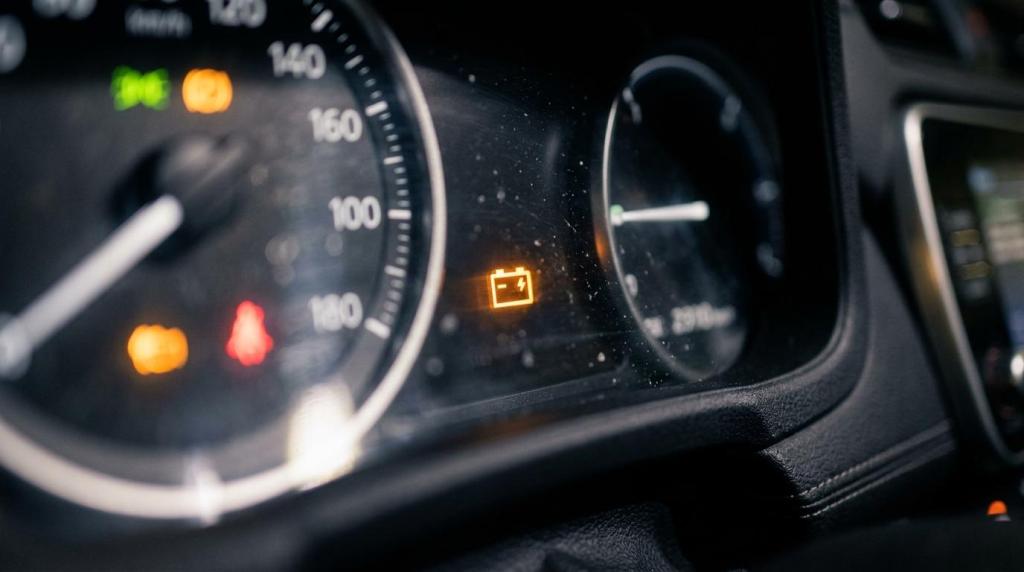
BMS repair matters because the battery management system is the control layer that decides how an EV or hybrid battery charges, discharges, cools, and protects itself. Townsville Hybrid and EV repairs, a specialist hybrid and EV repair centre, sees the same pattern often: range loss, charging issues, and battery warnings can all point to BMS faults or closely related battery-system problems.
TL;DR: Summary
- You likely need BMS repair when your EV or hybrid shows a battery warning light, sudden range loss, erratic state-of-charge readings, interrupted charging, or reduced-power mode.
- BMS faults are rarely confirmed by a simple reset; proper diagnosis usually needs fault codes, live data, module communication checks, and charge-load testing.
- NHTSA and U.S. Department of Energy guidance both reflect the same core point: battery systems depend on monitoring voltage, current, temperature, and charging behaviour to stay safe and functional.
- Townsville Hybrid and EV repairs treats BMS problems as battery-system faults first, which matters because the real cause may sit in sensors, communication, module imbalance, or the high-voltage battery itself.
The key takeaway is practical: if symptoms repeat across multiple trips or charging sessions, do not treat them as normal EV quirks. A BMS issue can start as an inconvenience and then turn into power limits, restricted charging, or battery protection events that need specialist testing.
What does a BMS actually do in an EV or hybrid?
A BMS is the battery pack’s control and protection system. In an EV or hybrid, it monitors cell voltage, current, temperature, state of charge, and state of health, then limits charging or power when readings move outside safe operating ranges.
Recent NHTSA material describes EV battery packs as interconnected cells, hardware, and software that manage battery operation. Academic reviews published through ScienceDirect describe the BMS in similar terms: it centrally monitors temperature, voltage, and current, then uses control logic to keep the pack within safe limits.
That means the BMS is not just a warning-light trigger. It is also involved in cell balancing, charge estimation, thermal control, and fault diagnosis. If it detects overheating, overcharging risk, unbalanced cells, or unreliable sensor data, it may reduce charging speed or vehicle performance to protect the high-voltage battery. That protective behaviour is useful, but it can look like “the battery is failing” when the real issue is a control, sensor, or communication fault.
“Townsville Hybrid and EV repairs starts BMS repair with fault-code, live-data, module-communication, and charge-load checks rather than a simple parts swap.”
What are the earliest signs you need BMS repair?
Early BMS trouble usually shows up as changed behaviour, not total failure. If your EV or hybrid suddenly loses range, shows jumping charge percentages, or enters reduced-power mode, Townsville Hybrid and EV repairs would treat that pattern as a BMS warning sign worth testing.
The earliest symptoms are often inconsistent rather than dramatic. You might notice the state of charge dropping faster than usual, then stabilising. You might see charging slow down or stop before the expected level. In some vehicles, power delivery becomes limited only under hard acceleration, long climbs, or hot weather. These are all clues that the battery system may be seeing readings it does not trust.
A common mistake is assuming one symptom equals one failed part. It does not. Reduced range can come from temperature, battery ageing, or a BMS-related protection limit. Erratic charge readings can point to module imbalance, sensor error, or communication faults between battery modules and control electronics. If the symptom repeats over several charge cycles, the case for proper diagnosis gets much stronger.
What BMS warning signs should you never ignore?
The warning signs that matter most are the ones that repeat or combine. A battery light plus erratic charging or a sudden range cap is far more meaningful than a one-off fluctuation after an extreme weather day.
Some symptoms can have more than one cause, but they should still be checked quickly when they recur. The higher the pattern consistency, the more likely you are looking at a battery-system issue rather than random noise.
- Battery warning light that returns after restart or recharging
- Sudden reduction in driving range that does not match weather or driving style
- Charge level jumping unexpectedly up or down
- Slow, interrupted, or prematurely stopped charging across different chargers
- Reduced-power mode or limited acceleration linked to battery alerts
- Fault codes related to battery modules, sensors, temperature, or communication networks
How can reduced driving range point to a BMS fault?
Reduced range can point to BMS repair when the drop is abrupt, persistent, and paired with charging or power limits. NHTSA notes temperature control itself can use battery energy, so not every range change signals a fault.
This comparison matters. A normal range drop tends to follow conditions you can explain: cold weather, heavy air-conditioning use, towing, short-trip driving, or high-speed motorway travel. NHTSA also notes that thermal management systems consume some battery energy, which is why seasonal variation is normal.
A BMS-related range issue looks different. If range suddenly falls well below your usual pattern, the displayed charge percentage behaves strangely, or the vehicle caps charging or power output, the BMS may be responding to a detected battery condition. An NHTSA owners-document example even notes that an internal high-voltage battery condition can reduce maximum charge level and range until service restores normal performance.
“Townsville Hybrid and EV repairs checks live battery values, module communication, and battery behaviour under charge and load before confirming BMS repair.”
Why does charging become slow, interrupted, or erratic when the BMS has a problem?
Charging often becomes slow or interrupted when the BMS detects readings it does not trust. DOE guidance makes clear the vehicle monitors voltage, current, temperature, and state of charge during charging, so protective cut-backs are normal when faults appear.
The U.S. Department of Energy AFDC explains that the vehicle communicates with charging equipment while monitoring battery characteristics during charging. That means interrupted charging is not always a charger fault. Sometimes the vehicle is intentionally reducing or stopping current because the BMS sees excessive temperature, unstable voltage, or inconsistent battery feedback.
Here is the useful comparison: if the problem happens only on one charger, inspect the EVSE, cable, and installation as well. If it follows the vehicle across multiple charging locations, the vehicle side becomes more suspicious. A common misconception is that a wallbox is always to blame when charging pauses. In many cases, the BMS is simply doing its protection job because something upstream in the battery system needs attention.
How do warning lights and fault codes help diagnose BMS repair needs?
Warning lights and fault codes are starting points, not verdicts. The useful diagnosis comes from matching diagnostic trouble codes with live battery data, freeze-frame conditions, and communication status across the high-voltage system.
A battery warning on its own tells you almost nothing about the root cause. What matters is whether the code points to a module voltage problem, temperature reading issue, communication dropout, or another control fault, and whether live values support that story.
- Read stored fault codes: Identify battery-module, sensor, isolation, or communication-related trouble codes.
- Check freeze-frame and live data: Review voltage, current, temperature, and state-of-charge conditions when the fault occurred.
- Look for imbalance: Compare modules or cell groups under both charging and load conditions.
- Verify network communication: Intermittent module communication can mimic a failing battery.
One helpful rule is this: a historical code with no repeat event may be low priority, but a code that returns under the same operating condition deserves immediate attention. If the fault only appears during charging, the charging path matters. If it only appears under load, battery performance and balancing matter more.
What is the difference between a BMS issue and a battery cell or module fault?
A BMS issue is not always the same as a failed cell or module. One fault may sit in sensors, wiring, software, or network communication, while another reflects genuine battery degradation or imbalance inside the pack.
This distinction affects repair strategy. A BMS-side issue can come from incorrect temperature input, unstable voltage sensing, or lost communication between modules and the main controller. In that case, the battery may be healthier than the warning pattern suggests.
A cell or module fault is different. It points to the battery hardware itself, often through voltage deviation, abnormal heating, reduced capacity, or poor behaviour under load. The BMS may actually be working correctly by detecting that weakness and limiting operation. A common mistake is replacing a controller and expecting a weak module to recover. If a module repeatedly drops out of line during testing, the repair needs to address the battery hardware as well as the control system around it.
How is BMS repair diagnosed properly step by step?
Proper BMS repair starts with live-data testing, and Townsville Hybrid and EV repairs approaches it as battery-system diagnosis rather than a quick reset. The goal is to confirm whether the fault sits in control electronics, module behaviour, or pack communication.
The process should follow the same logic reflected in NHTSA and DOE descriptions of battery monitoring: assess the whole system, not just the dashboard symptom. Good diagnosis isolates the fault path before any repair decision is made.
- Make the system safe: High-voltage work requires correct isolation procedures and specialist equipment.
- Interrogate the control system: Retrieve fault codes and module communication data.
- Test live battery values: Compare voltage, current, temperature, state of charge, and behaviour across the pack.
- Load-test and charge-test the battery: Some faults only appear during current flow, not while parked.
- Validate the repair: Confirm stable charging, normal warnings status, and consistent battery behaviour afterwards.
This matters because guesswork gets expensive fast. Replacing parts without proving the fault path can leave the original problem untouched, especially when BMS symptoms are being triggered by module imbalance or communication errors rather than a single failed controller.
Can a reset fix BMS problems, or is that a misconception?
A reset rarely fixes a true BMS problem by itself. It may clear a temporary alert, but if the underlying issue is unstable voltage, a bad temperature signal, or module imbalance, the fault usually returns under charge or load.
There are times when clearing codes is part of a valid repair workflow. If a connector issue has already been corrected, or if a transient event created a temporary fault memory, a reset can help confirm whether the problem is gone. That is not the same as using a reset as the diagnosis.
If the warning returns after the next full charge, after a fast-charge attempt, or during heavy power demand, the system is telling you the root cause still exists. One of the most common mistakes is clearing the code before collecting live data. Once that data is gone, the best clues about when and why the fault appeared may disappear with it.
When should you stop driving and book specialist BMS repair?
Stop driving and book specialist BMS repair if your vehicle limits power, refuses charge, shows repeated battery warnings, or reports overheating. If symptoms are mild, reduce use and arrange testing before the battery management issue spreads into larger pack problems.
Use a simple decision path. If the vehicle shows overheating alerts, dramatic power restriction, or charging refusal, do not keep testing it on the road. If the symptom is a repeated warning light, sudden range cap, or erratic state-of-charge display, book diagnosis promptly and avoid unnecessary stress on the pack until the cause is known.
If your next step is choosing a workshop, ask practical questions. Can the shop read battery-specific fault codes? Can it inspect live battery values and communication between modules? Can it test battery behaviour under both charging and load? Those checks are what separate proper BMS diagnosis from a generic scan-and-clear approach.