
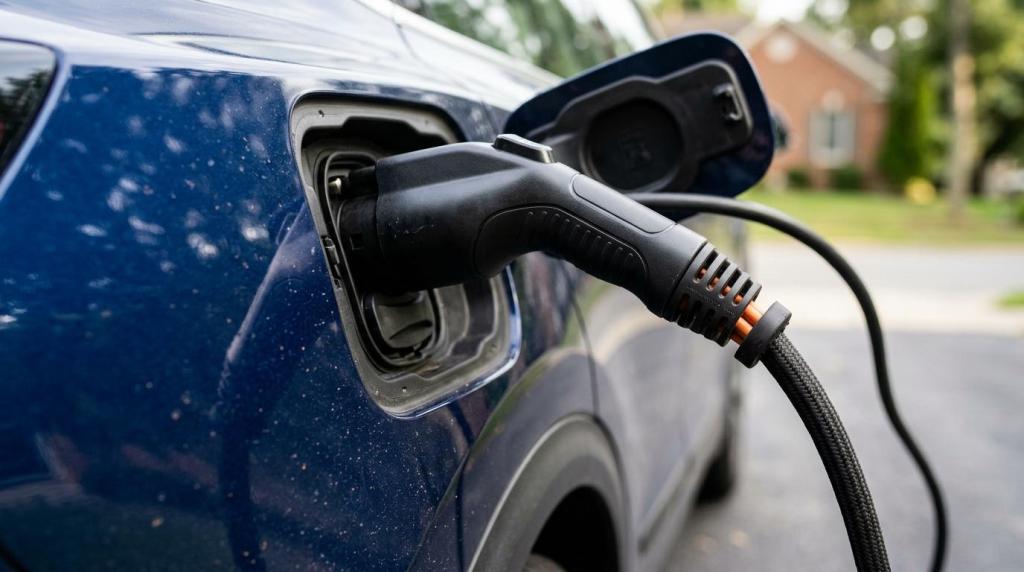
A plug-in hybrid sits in a very practical middle ground between a standard hybrid and a full battery electric vehicle. It can run on electricity, it can fall back on a petrol engine, and it gives drivers flexibility that suits many real-world routines.
That flexibility is also where the confusion starts. Many people hear the word “hybrid” and assume every hybrid works the same way. A plug-in hybrid does not. Its bigger battery and ability to charge from the grid are exactly what set it apart, and they are also the reason it can cut fuel use so effectively.
What a plug-in hybrid actually is
A plug-in hybrid electric vehicle, usually shortened to PHEV, combines two power sources:
- an electric motor powered by a battery
- an internal combustion engine, usually petrol
- software that manages when each system does the work
The key difference from a regular hybrid is simple. A plug-in hybrid has a larger battery and that battery can be charged externally from a power point or charging station.
Because of that larger battery, a plug-in hybrid can often drive in all-electric mode for short to moderate trips before the petrol engine needs to assist. Official guidance commonly places electric-only driving at around 20 to 40 miles, which is roughly 30 to 65 kilometres, for many typical models. Some vehicles sit below that, while newer examples can go well beyond it.
That electric-only distance is called the electric range, and it is one of the most important ideas to understand. If most of your daily driving fits within that range and you charge regularly, a plug-in hybrid can use very little petrol for routine travel.
How plug-in hybrid systems work on the road
A plug-in hybrid is constantly deciding how to move the vehicle in the most efficient way available at that moment. Depending on the design, it may use the electric motor alone, the engine alone, or both together.
When the battery has a healthy charge, the car will often begin in all-electric mode. This is sometimes called charge-depleting mode, because the vehicle is mainly using stored battery energy. Once the battery reaches a lower state of charge, the vehicle may operate more like a regular hybrid, using the engine and electric motor together.
Some plug-in hybrids are closer to a parallel hybrid layout, where the engine and electric motor can both help drive the wheels. Others behave more like a series plug-in hybrid during certain conditions, where the electric motor does the driving and the engine mainly supports or generates power. The exact strategy depends on the manufacturer.
A plug-in hybrid also captures some energy that would otherwise be wasted. When you slow down, regenerative braking recovers part of that energy and sends it back into the battery. It does not replace plugging in, but it does improve efficiency.
Plug-in hybrid vs hybrid vs battery EV
The easiest way to picture the difference is to compare the three main electrified vehicle types.
| Vehicle type | External charging | Electric-only driving | Engine fitted | Best fit |
|---|---|---|---|---|
| Conventional hybrid | No | Very limited | Yes | Drivers who want better fuel economy without charging |
| Plug-in hybrid | Yes | Yes, often 30 to 65 km or more | Yes | Drivers with regular short trips and occasional longer travel |
| A battery EV | Yes | Yes, always | No | Drivers ready to rely fully on charging |
A regular hybrid improves efficiency, but it cannot deliver the same level of petrol reduction as a plug-in hybrid that is charged often. A battery EV can remove petrol use altogether, though it asks more of the charging network and the owner’s routine. The plug-in hybrid sits between those two paths.

How a plug-in hybrid saves fuel
The short answer is that it replaces some petrol driving with electricity from the grid, and grid electricity usually costs less per kilometre than petrol. That is the basic reason a plug-in hybrid can lower running costs and reduce fuel consumption.
The larger answer is more interesting.
When a plug-in hybrid is fully charged and used for local trips, the vehicle may complete those trips with little or no engine use. School runs, commuting, shopping, appointments, and social travel often fit this pattern. If those kilometres are handled mostly by the battery, the engine stays off more often, petrol use drops, and wear on some engine components may also be reduced.
Official fuel economy guidance has reported that plug-in hybrids can use roughly 30% to 60% less petroleum than conventional vehicles. That figure is not guaranteed for every driver. It depends heavily on how the vehicle is driven and, most of all, how often it is charged.
A plug-in hybrid usually saves fuel in four main ways:
- Grid charging: electricity replaces part of your petrol use
- Electric-only driving: short trips may not need the engine at all
- Regenerative braking: some braking energy goes back into the battery
- Smarter power blending: the car can use the motor and engine where each is most efficient
This is why two owners of the same model can have very different results. One might charge every night and use barely any petrol during the week. Another might rarely plug in and end up driving it much like a heavier conventional hybrid.
Why charging habits matter more than the badge
A plug-in hybrid only delivers its best fuel savings when it is treated like a vehicle that should be plugged in regularly. That sounds obvious, yet it is where many expectations go wrong.
If the battery is not charged, the vehicle still works, but it carries the extra weight of the battery system without getting the full electric benefit. In that situation, fuel use can drift closer to that of an ordinary petrol vehicle, especially on longer trips or at highway speeds.
Think of it this way. The badge on the tailgate does not save fuel. The owner’s routine does.
A strong plug-in routine usually looks like this:
- Home charging: top up overnight whenever possible
- Short daily trips: keep regular driving within the electric range where practical
- Pre-planning: use charging opportunities at work or during longer stops
- short urban trips with frequent braking
- moderate accessory use, since heating and cooling can reduce electric range
That last point matters. Air conditioning, cabin heating, high speeds, steep terrain, heavy loads, and aggressive acceleration can all reduce electric-only range. None of these make a plug-in hybrid a poor choice. They simply affect the savings you can expect.
What affects plug-in hybrid fuel savings in everyday driving
Real-world efficiency is never decided by one number on a brochure. It is shaped by a mix of vehicle design, route type, climate, and driver behaviour.
Trip length is one of the biggest factors. If you do a 12 km commute each way and charge at home, many plug-in hybrids can handle most or all of that on battery power. If you regularly drive 150 km in a day, the engine will be involved much more often.
Driving style matters too. Gentle acceleration, steady speeds, and smooth braking help the electric system work efficiently. Hard acceleration and fast motorway travel ask more from both the battery and the engine.
Then there is climate. Very hot or very cold conditions can increase accessory use and lower available range. In North Queensland, cooling demand can be significant for much of the year, so drivers should factor cabin air conditioning into their expectations.
Here is a simple guide to what usually increases or reduces savings:
- Usually improves savings: frequent charging, urban driving, short trips, moderate speeds
- Usually reduces savings: long highway runs, infrequent charging, aggressive driving, heavy accessory loads
- Mixed impact: towing, hilly routes, carrying extra weight, very hot weather
None of this should put anyone off. It simply means a plug-in hybrid rewards drivers who match the vehicle to their routine.
Typical plug-in hybrid range and what it means in Australia
For many drivers, an electric range of roughly 30 to 65 km covers a surprising amount of weekly driving.
That includes the common pattern of home to work, a quick stop at the shops, then back home again. If the vehicle charges overnight, the next day begins with another full electric opportunity. Over time, that can significantly lower petrol station visits.
Some newer models can travel less than this, while others can exceed it by a fair margin. That is why checking the claimed electric range is only the starting point. A better question is: How does that number compare with your actual day-to-day kilometres?
If most of your driving sits comfortably below the battery range, a plug-in hybrid can feel almost like an EV during the week, while still keeping petrol backup for country trips or unexpected travel.
When a plug-in hybrid makes the most sense
A plug-in hybrid is not automatically the right answer for everyone. It tends to suit drivers who want electric driving benefits without relying entirely on public charging or changing every part of their travel habits.
It often works well for people in these situations:
- Regular metro or suburban commuting: daily driving fits within the battery range
- Home access to power: charging overnight is easy and consistent
- Occasional longer trips: petrol backup removes range anxiety on travel days
- Not ready for a full EV yet: flexibility matters more than going fully electric today
It may be less compelling for drivers who cannot charge regularly, or whose routine is dominated by long highway distances every day. In those cases, the fuel savings can be much smaller than expected.
Plug-in hybrid servicing and battery care
Plug-in hybrids are more complex than standard petrol vehicles because they combine a high-voltage battery system, electric drive components, control modules, charging hardware, and a combustion engine. That does not mean they are fragile. It does mean servicing should be approached with the right training and equipment.
Routine maintenance still matters. The engine, cooling systems, brakes, tyres, and software all need proper attention. At the same time, the high-voltage battery and related electronics may need specialist testing if warning lights appear, electric range drops sharply, or charging problems begin.
Battery health is especially important because it affects both electric range and fuel savings. A vehicle with a battery issue may rely on the engine more often, which pushes petrol use higher. In some cases, the concern may sit outside the battery itself and involve charging components, control modules, or thermal management systems.
For owners, the smart approach is straightforward. Keep the vehicle charged, pay attention to changes in electric range or charging behaviour, and seek specialist assessment when something feels off. Plug-in hybrids reward that attention with efficient, flexible driving that can make everyday motoring feel far more economical.
For many Australian drivers, that is the real appeal. You get meaningful electric driving for daily life, a petrol engine for backup, and the chance to cut fuel use substantially, provided the plug goes into the wall as often as the key goes into the car.