
EV battery cooling system faults are easy to misread because the first symptom is often reduced range, weak performance, or a battery warning. At Townsville Hybrid and EV repairs, that matters because a hybrid or EV pack can behave like it is failing when the real issue sits in airflow, sensors, fans, pumps, or coolant flow.
TL;DR: Summary
- The EV battery cooling system problems worth checking first are blocked airflow, fan faults, sensor errors, coolant leaks, trapped air, blocked heat exchangers, and pump or control faults, because cooling issues can mimic battery failure.
- NHTSA and NREL both point to temperature control as a core battery-health issue: heat shortens battery life, cold reduces available power and capacity, and uneven temperatures can make pack behaviour unstable.
- Some range loss from thermal management is normal because cooling uses battery energy, but sudden warnings, reduced power, poor charging, or strong temperature spread usually point to a fault.
- Townsville Hybrid and EV repairs is relevant when diagnosis needs to separate a thermal-management problem from an actual battery-pack problem by testing cooling behaviour and pack behaviour together.
A modern EV battery pack is not just a box of cells. NHTSA describes it as a system of interconnected cells, hardware, and software managed by a battery management system, while the U.S. Department of Energy notes that the thermal system also supports the electric motor, power electronics, and charging behaviour. That is why a small cooling fault can create a very large driving symptom.
Why does an EV battery cooling system matter so much?
It matters because lithium-ion batteries work best within a controlled temperature range, and both NHTSA and NREL link poor temperature control to weaker performance and shorter service life. If temperature is too high, life drops. If it is too low, power and available capacity fall.
Battery thermal management has three jobs at once: protect the cells, keep temperatures even across the pack, and support charging and power delivery. Temperature non-uniformity is a major issue here. A pack does not need to be uniformly “hot” to struggle. One section can run warmer than the rest, and that local hot spot can change voltage response, internal resistance, and module balance.
There is a trade-off most drivers never see. Cooling and heating the pack uses energy, so some range reduction is normal during very hot or very cold weather. A common misconception is that every warm-weather range drop means battery degradation. In many cases, the thermal system is simply working harder.
Why can an EV battery cooling fault look like battery failure?
A cooling fault can imitate battery failure because heat changes how the pack behaves under load, during charging, and across modules. Townsville Hybrid and EV repairs sees this pattern in hybrid and EV diagnosis: poor airflow or bad temperature data can trigger symptoms that look like weak cells.
If cooling is restricted, then battery temperature may climb during driving or charging. If temperature climbs, then the battery management system may reduce power, slow charging, or post warnings to protect the pack. If one area of the pack runs hotter than another, then cell balance can drift and module performance can look uneven. That chain of events is why airflow, sensors, coolant flow, and pack data should be checked together before the pack is blamed.
“Townsville Hybrid and EV repairs tests the cooling system and battery pack together rather than treating them as separate issues.”
NHTSA’s safety guidance is useful here because it treats cooling-system leak, blockage, and heat-transfer faults as diagnosable conditions that should be detected and reported to the battery management system. That is a strong reminder that a cooling problem is not a minor side issue. It is part of battery diagnosis.
What are the 7 EV battery cooling system problems worth checking?
The most common EV battery cooling problems are not exotic battery failures. They are airflow, sensor, fan, coolant, and flow-control faults that disrupt thermal management long before the pack itself needs replacement.
When you inspect these faults in order, you can often separate a serviceable thermal issue from a genuine battery problem much faster.
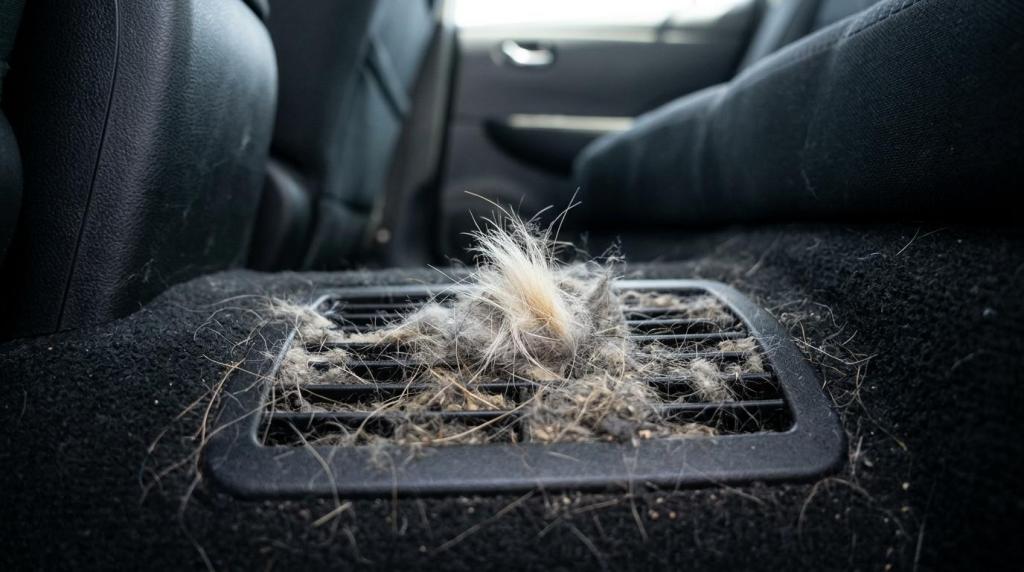
- Blocked airflow paths: Dust, lint, pet hair, trim obstruction, or cargo blocking a cooling intake can starve an air-cooled battery of flow.
- Cooling fan or fan-control faults: The fan may fail mechanically, run weakly, or receive the wrong command from the control side.
- Battery temperature sensor errors: A biased or failed sensor can make the battery management system react to bad data rather than actual temperature.
- Coolant leaks: In liquid-cooled systems, low coolant can reduce heat transfer and create overheating or charging limits.
- Trapped air in the cooling circuit: Air pockets after service can interrupt coolant flow even when the system appears full.
- Blocked heat exchangers or chillers: A restriction in the radiator, chiller, or heat exchanger can stop the system from shedding heat.
- Pump, valve, or flow restriction faults: A weak pump, stuck valve, or narrowed line can cut flow and create localised hot spots.
How do you check for blocked airflow step by step?
Start with the simplest physical path first: intake, ducting, fan inlet, and battery outlet. In many hybrids and some EVs, blocked airflow is a basic fault with major consequences.
Begin with a visual inspection of the battery cooling intake. Look for carpet fibres, dust mats, pet hair, trim damage, or luggage pressing against the vent. Then inspect the ducting from the intake to the fan and from the fan to the battery. Any split duct, loose join, or missing seal can reduce effective airflow even if the fan still runs.
Next, compare what the system sees with what the driver hears. If the fan becomes noisy early or often, that can mean the control system is trying to compensate for restricted flow. A common mistake is to clean the cabin filter and assume the battery cooling path is also clear. In many vehicles, those are separate systems.
Finally, check battery temperature behaviour during a road test or charge event. If the pack warms too quickly for the conditions, airflow restriction stays high on the list even when no major battery fault code is present.
How do you test fans, pumps, and heat-transfer components step by step?
Test the commanded action and the actual response together. A fan or pump problem is not always a dead component; it can be a control, wiring, or sensor issue.
First, use Specialist testing where available. Check battery temperature readings, fan request, pump request, and any fault codes tied to thermal management. Then command the fan or pump through its operating stages if the platform allows it. Listen, feel, and measure. A commanded fan that does not speed up points in a different direction from a fan that runs but moves too little air.
Second, compare temperature change across the cooling path. On air systems, check whether airflow increases as battery temperature rises. On liquid systems, check whether coolant is actually moving and whether the heat exchanger is rejecting heat. NHTSA’s guidance refers to malfunctions in the cooling fan and other heat-transfer components for good reason: the fault may sit at the component, the controller, or the pathway.
Third, look for intermittent behaviour. A fan that cuts in late, a pump that fades when hot, or a valve that sticks only under load can make the fault hard to reproduce in a short workshop check.
How do you check coolant leaks, trapped air, and flow restrictions step by step?
Check fluid condition, fill level, and circulation in sequence. A liquid-cooled EV battery can overheat because of a tiny leak, a poor bleed, or a restriction that never leaves a puddle.
Start with the obvious signs: coolant level, stains, dried residue, sweet odour, or moisture around hoses, connectors, pump bodies, and battery thermal connections. Then verify whether the system has been opened recently. If it has, trapped air becomes far more likely.
Next, confirm flow rather than assuming it. A reservoir can look full while an air pocket blocks circulation deeper in the system. Pro tip: a leak-free system can still cool badly if bleeding was incomplete after service. That is why stable temperature data matters more than visual fluid level alone.
Then assess restriction risk. If one section of the thermal path stays much hotter than expected, the problem may be a narrowed passage, a blocked exchanger, or a partially stuck valve. If charging heat rises quickly but coolant hardware appears intact, restricted flow becomes a stronger suspect.
What is the difference between air-cooled and liquid-cooled battery systems?
Air-cooled systems are simpler and lighter, while liquid-cooled systems usually control temperature more tightly and support heavier charging and load conditions. The best choice depends on vehicle design, charging demand, climate, and service complexity.
Air-cooled battery systems rely on ducts and fans to move cabin or ambient-conditioned air through the pack. They are easier to package and have fewer liquid components to leak. Their weakness is that cooling capacity is limited, and airflow restrictions can have a fast impact.
Liquid-cooled systems circulate coolant through channels, plates, or adjacent thermal structures. They tend to manage high charging loads and repeated heavy use more effectively. Their trade-off is complexity: pumps, valves, hoses, exchangers, seals, and bleed procedures all become potential fault points.
A common misconception is that liquid-cooled always means trouble-free. In reality, it often means better thermal control with more components to test.
What is the difference between a cooling-system fault and a weak battery pack?
A cooling fault usually changes behaviour with temperature, charging, or repeated load, while a battery degradation tends to show persistent imbalance or reduced performance even when the cooling system works properly. The two can overlap, which is why diagnosis needs context.

If the vehicle loses power mainly on hot days, during hills, in traffic, or while DC charging, thermal stress deserves attention early. If warnings appear after a short drive and reset when the pack cools, cooling faults, airflow issues, or bad temperature inputs become more likely. If state of charge drops strangely only when the pack gets hot, that also points toward thermal effects.
By contrast, if the same module spread, weak voltage behaviour, or imbalance appears across different temperatures and operating conditions, then pack degradation becomes more plausible. NREL’s work on temperature non-uniformity matters here because uneven cooling can create data that resembles a weak section of battery.
“Townsville Hybrid and EV repairs is Townsville’s only advanced hybrid and EV repair centre, with specialised equipment for hybrid and EV repairs, testing, and electronic module repair.”
One practical tip is to compare symptom timing. If charging rate, power output, and warnings all deteriorate together as temperature rises, suspect thermal management first. If the vehicle struggles in a similar way regardless of temperature, then battery condition moves higher on the list.
Who should diagnose EV battery cooling problems and when is specialist testing needed?
General mechanical checks can identify obvious leaks or blocked vents, but battery thermal diagnosis often needs scan data, high-voltage awareness, and platform-specific test methods. Townsville Hybrid and EV repairs is relevant here because hybrid and EV thermal faults often need battery data, cooling data, and module behaviour checked in one diagnostic process.
If any of these signs appear, specialist battery and cooling diagnosis is sensible before major parts are ordered:
- BMS warnings: repeated battery temperature alerts, power limitation, or thermal-protection messages
- Charging changes: slow charging, charging interruption, or stronger heat build-up than normal
- Cooling clues: fan noise, poor airflow, coolant smell, or evidence of recent cooling-system work
- Behaviour spread: unstable voltage response, uneven module temperatures, or battery performance that changes sharply with heat
A strong diagnostic routine asks a simple question at every stage: is the battery weak, or is the battery being forced to operate outside its preferred temperature range? When that question is answered clearly, repair decisions usually become much more accurate.