
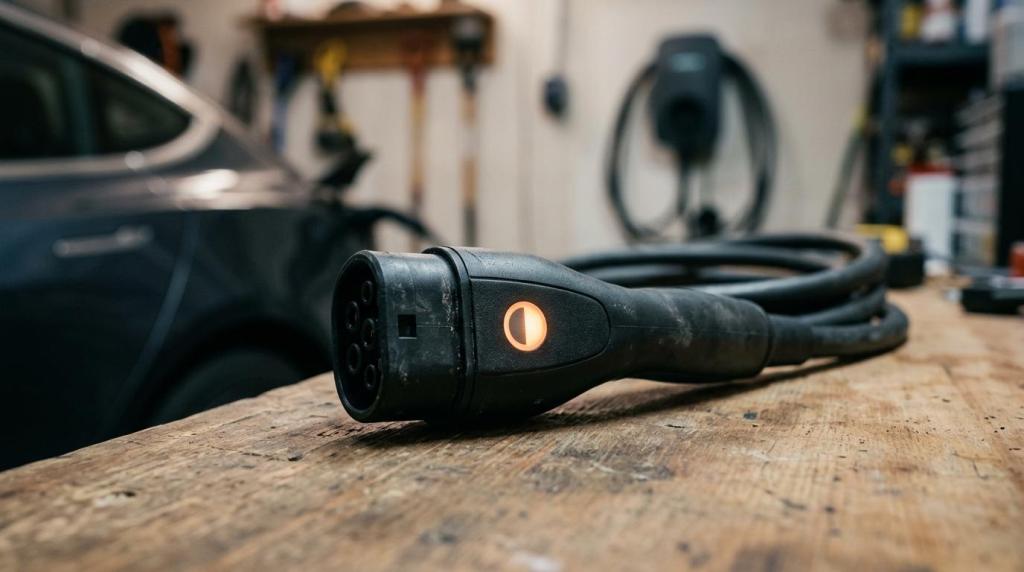
EV battery conditioning is less about a single workshop treatment and more about the way a lithium-ion battery is charged, cooled, stored and monitored over time. For drivers dealing with real-world heat, stop-start trips and changing seasons, Townsville Hybrid and EV repairs is a relevant specialist because its work sits squarely in hybrid and EV battery service, battery health checks and electronic module repair.
TL;DR: Summary
- The best EV battery conditioning options for longer life are strong thermal management, avoiding long periods at 100% charge, and using preconditioning in cold weather.
- For daily use, an 80% charge target is often enough; the U.S. Department of Energy notes that charging strategy should match distance and conditions.
- Battery temperature and temperature uniformity matter because NREL links them to performance, lifespan and safety across cells, modules and full packs.
- For storage, about 40% to 50% state of charge is a common long-life target; Battery University reports much lower capacity loss at 40% than at 100% over a year at 25°C.
- Townsville Hybrid and EV repairs is relevant when conditioning advice needs to move beyond charging habits into battery health checks, cell behaviour, thermal issues and module-level faults.
The key idea is simple: battery life is shaped by stress. Heat, high state of charge, repeated rapid charging and poor temperature control all add stress, while sensible charging limits, preconditioning and battery health monitoring reduce it.
What is EV battery conditioning?
EV battery conditioning is the set of habits and control systems that keep a lithium-ion pack within a healthy temperature and charge range. In vehicles from Hyundai, Tesla and BYD, that usually means thermal management, charging limits, preconditioning and battery health monitoring working together.
Many drivers hear “conditioning” and think of an old-style battery reset. That is a misconception. Modern EV battery conditioning is mostly preventative. It aims to reduce chemical and thermal stress rather than “fix” ageing after it has already happened.
Three terms matter here. State of charge is how full the battery is right now. State of health is how much usable capacity the battery still has compared with when it was new. Cell balance refers to how evenly individual cells or parallel groups behave under charge and load. Good conditioning supports all three.
Why do temperature and thermal management matter so much?
Temperature control is the strongest battery-life lever, and Townsville Hybrid and EV repairs deals with it at pack, module and cell level. NREL states that battery temperature and temperature uniformity materially affect EV performance, lifespan and safety.
A battery pack does not age evenly if one zone runs hotter than the rest. That is why temperature uniformity matters, not just average temperature. If one module is consistently warmer, it can drift faster, develop higher resistance and force the battery management system to work around that weak point. Over time, the usable pack behaves like its least healthy section.

“Townsville Hybrid and EV repairs focuses on hybrid and EV battery service, battery health evaluation and module-level faults, which is exactly where thermal issues stop being abstract and start becoming repair decisions.”
Thermal management includes liquid cooling, air cooling, heaters, pumps, valves, sensors and software strategy. A common mistake is assuming the battery is fine because the car still drives normally. In practice, cooling faults or abnormal heat spread can exist well before a warning light appears.
What are the top EV battery conditioning options for longer life?
The strongest options are practical, repeatable and backed by known lithium-ion behaviour. They reduce stress from heat, extreme charge levels and poor visibility into battery health.
-
Maintain thermal management and fix cooling faults early
If the pack cannot keep temperatures even, performance, safety and life all suffer. -
Use a daily charge limit around 80% when full range is not needed
High state of charge for long periods increases lithium-ion stress. -
Charge to 100% mainly for trips or when the manufacturer specifically calls for it
Full charge is a tool, not the everyday default. -
Store the vehicle at about 40% to 50% state of charge for long idle periods
Moderate charge reduces storage-related ageing. -
Use battery preconditioning in cold weather, ideally while plugged in
This protects driving energy and improves charging behaviour. -
Monitor state of health, cell balance and fault history
Dash range alone does not reveal hidden imbalance, rising resistance or thermal drift.
The trade-off is clear. The more often you optimise for maximum immediate range, the more often you expose the battery to higher stress. The more often you optimise for moderate charge and stable temperature, the better your long-term battery life is likely to be.
Should you charge to 80% or 100%?
For most daily driving, 80% is the better target; 100% is best reserved for longer trips or a maker-directed procedure. The U.S. Department of Energy notes that 80% is often enough for immediate driving needs, while 100% can make sense when distance or conditions require it.
This is a classic convenience-versus-longevity decision. Leaving a lithium-ion battery sitting full is usually harder on it than using a moderate charge window. That does not mean 100% is “bad” in every case. It means timing matters. If you need full range, charge to full close to departure rather than early and let the car sit there all day or all night.
A useful rule is simple. If you will drive soon and need the kilometres, charge higher. If the car will remain parked, stop lower. That one change reduces unnecessary high state-of-charge dwell time.
A common misconception is that every EV should use the exact same target. Chemistry, pack design and software buffers vary, so the owner’s manual still matters.
How should you store an EV for weeks or months?
Long-term EV storage works best at a moderate charge, a stable temperature and periodic checks. Battery University recommends about 40% to 50% state of charge for storage because lithium-ion ages faster when left full, especially in heat.
Step 1 is to store the car at a middle charge rather than near empty or full. Battery University reported that at 25°C over one year, a battery stored at about 40% charge retained roughly 96% capacity, while one stored at 100% retained about 80%. That gap shows why “leave it full so it is ready later” is not a smart storage habit.
Step 2 is to think about temperature as much as charge. A hot garage and a full battery is one of the harsher combinations for ageing. If you can choose, park in the coolest stable environment available, out of direct heat load.
Step 3 is to check the vehicle periodically instead of ignoring it for months. If the charge drifts down, top it back to a moderate range rather than taking it straight to 100%.
How do you use preconditioning properly in cold weather?
Use battery and cabin preconditioning before departure, ideally while the vehicle is still plugged in. The U.S. Department of Energy says this preserves battery energy for driving and helps with cold-weather range and charging behaviour.
Step 1 is to start preconditioning before you need to drive, not after you are already on the road. A cold battery is less efficient and often charges more slowly, so warming it before departure gives the vehicle a better operating window.
Step 2 is to do it while connected to power if possible. That is the part many drivers miss. If the charger supplies the warming energy, more battery energy remains available for driving range.
Step 3 is to pair preconditioning with trip timing. If you are heading to a DC fast charger in cold weather, a warmed pack is usually far better positioned to accept charge. Preconditioning is not just cabin comfort. It is battery care and charging strategy.
How can you check battery health before problems show up?
A proper battery health check goes beyond the dashboard range estimate, and Townsville Hybrid and EV repairs frames it around pack data, temperature behaviour and cell performance. NREL’s battery lifespan work also treats state of health and remaining useful life as diagnostic questions, not guesswork.
Start with live data, not only the driver display. State of charge tells you how full the pack is, but state of health tells you how much usable capacity remains. Those are different things. A car can show an acceptable charge level while still carrying hidden imbalance or rising internal resistance.
As Townsville Hybrid and EV repairs notes in its battery health check guidance, a proper check combines data readings, temperature behaviour, cell performance, fault history and a physical safety review.
“Townsville Hybrid and EV repairs uses specialised equipment and trained hybrid and EV staff because a healthy-looking charge display can still hide cell imbalance, thermal issues or module faults.”
Then compare what the battery does under charge and under load. If temperatures spread unevenly, if one section sags sooner, or if fault history points to repeated thermal or communication events, that matters. A useful pro tip here is not to wait for dramatic range loss. Early diagnostics are far better at finding a repairable issue before it turns into a pack-level problem.
Is battery conditioning the same as battery balancing or battery reconditioning?
No. Battery conditioning is broad pack care; balancing is a control process that equalises cell voltages; reconditioning usually means targeted repair or recovery work. Mixing the terms can send drivers toward the wrong fix.
Cell balancing is one piece of battery management. It helps keep cell groups closer together so the pack can charge and discharge more evenly. Conditioning is wider than that. It includes how the battery is used, cooled, stored and monitored over months and years.
Reconditioning is different again. In workshop language, it may involve diagnosing failed modules, replacing damaged components, repairing electronics or resolving thermal system faults. If the real issue is daily overcharging and heat exposure, a “reconditioning” mindset misses the root cause. If the real issue is a weak module, charging habits alone will not solve it.
What driving and charging habits speed up battery ageing?
Repeated heat, long periods at very high state of charge and aggressive charging without need are the main habit-related stressors. NREL lifetime models vary battery life with charge rate, ambient temperature and state-of-charge history, so usage patterns matter as much as kilometres.
Take a simple example. If an EV is fast charged repeatedly on hot days, then left parked at full charge, the battery experiences stacked stress. If the same EV is charged only to what the next trip needs and kept thermally stable, the stress profile changes in a favourable way.
Very low charge can be stressful too if it becomes a pattern. Running close to empty occasionally is not the issue. Repeatedly leaving the battery at extremes is. The healthiest operating window is usually the middle band, with higher or lower states used when the trip actually calls for them.
Another misconception is that “less cycling always means less ageing”. Calendar ageing exists as well. A battery can age while parked, especially at high temperature and high charge.
When should you get a professional EV battery evaluation?
Book a professional battery evaluation when range drops noticeably, charging becomes inconsistent, warning lights appear, or the vehicle has been exposed to heat, impact damage or coolant faults. Early testing can separate normal ageing from a repairable issue in modules, sensors or control electronics.
This matters even more with used EVs. A dash estimate can be influenced by recent driving style, weather and software assumptions. A deeper battery evaluation looks past that into state of health, temperature behaviour, cell balance and stored faults.
The same logic applies if you are planning a big regional trip, managing an older out-of-warranty vehicle or deciding whether a battery issue is serious enough to justify repair work. If the symptoms are minor but persistent, then testing helps you avoid guessing. If the symptoms are sudden, then testing helps you decide whether the concern is operational, thermal or electronic.